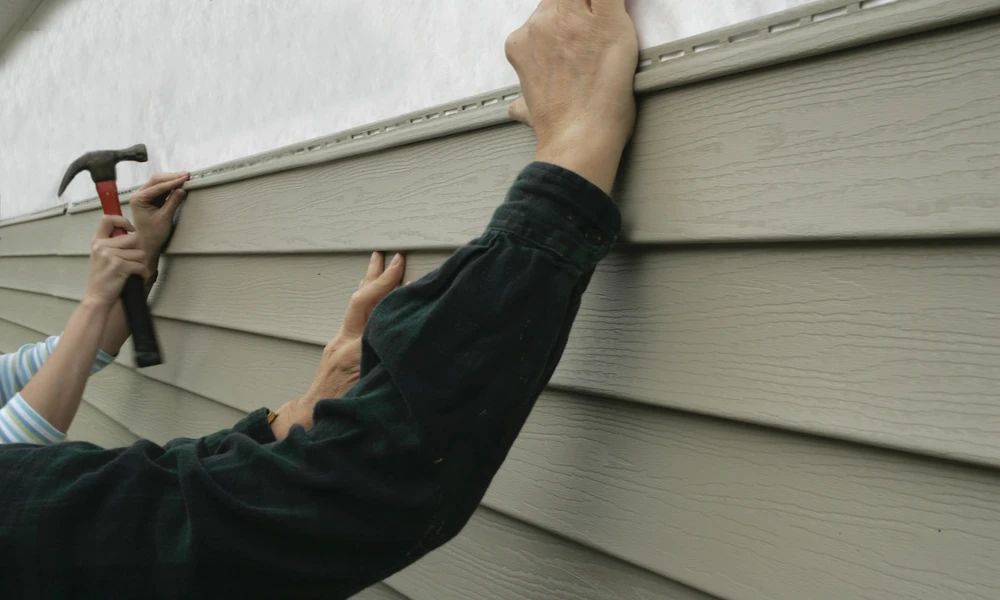
Exterior siding can look perfectly intact while water slips in through a poorly sealed joint, an open penetration or a flashing connection that was never lapped correctly. The panels you see from the driveway are only the outer face of a wall assembly. Most moisture damage starts in the layers behind them, out of sight, long before a stain shows up indoors.
In Arnold, the weather gives that hidden process plenty of help. The St. Louis region sits on the boundary between humid continental and humid subtropical climates, according to the National Weather Service. Spring and summer bring strong thunderstorms with hail and damaging winds, summers stay humid, and freezes usually arrive in October and linger into early April. Each of those conditions stresses a different part of the wall.
When something looks off, Arnold siding services from starsandstripesroofingandexteriors.com begin with a siding inspection and extend to repairs, removal of damaged sections, moisture barrier installation and new vinyl, fiber cement or engineered wood siding. Their exterior construction work covers related wall improvements when the problem reaches past the cladding, and gutter work comes in when runoff is feeding water toward the siding. Requesting a professional siding assessment is the most reliable way to learn what is happening behind the panels.
Starting at the Surface
Cracks and impact marks. Hail and wind-blown debris can dent, chip or crack siding. A split panel or broken board is more than a blemish because it opens a direct path to the layers underneath.
Warping and loose panels. Buckled or wavy siding can come from installation that did not allow for expansion, from heat exposure, or from moisture working underneath. Loose panels lift in high wind and leave the wall exposed during the next storm.
Fading and weathering. Chalky or faded color is usually cosmetic. The useful distinction is simple. A surface issue that leaves the cladding sealed and solid can wait for a convenient time. A defect that creates an opening, or one that shows up alongside staining, swelling or soft spots, deserves a closer look.
Where Water Finds Its Way In
Windows and doors. Every opening forces the siding to stop and meet a frame. Those edges are the most common water-entry points on a house, especially when storms push rain sideways.
Corners and trim. Corner posts and trim boards are joints by design. When they shift or separate, water reaches the edges of the panels and runs behind them.
Utility openings. Dryer vents, hose bibs, electrical boxes, cable entries and air conditioning line sets all puncture the wall. Sealant around them ages and cracks over time, and caulk alone was never meant to do the job of flashing.
Flashing and Drainage Details
How water should move. A well-built siding wall assumes some water will get behind the cladding. Flashing at windows, doors, deck ledgers and roof-to-wall transitions catches that water and directs it back outside, with each upper layer lapping over the one below. The EPA’s moisture control guidance treats controlling liquid water as the first principle of keeping buildings dry, and walls that drain are central to that approach.
When drainage fails. Problems start when flashing is tucked behind the barrier instead of over it, when laps run in reverse, or when siding is installed tight against roofing or soil. Water that should exit gets trapped and soaks into whatever sits behind it.
The Barrier Behind the Siding
Moisture-resistive barrier. Housewrap or building paper forms the real drainage surface of the wall. Siding sheds most rain, but it is not a waterproof skin, and treating it as one is a common mistake. HUD’s Durability by Design guide for residential builders covers rain control in exterior walls, including the roles of housewraps and flashing.
What goes wrong. Torn sections, missing pieces around openings and seams that were never lapped all let water reach the sheathing. Humid summers make it harder for a wet wall to dry out, so small leaks can linger.
Sheathing and Wall Structure
Signs of concealed damage. Moisture stains on interior walls near windows, peeling interior paint, musty odors and siding that flexes or feels soft when pressed can all point to wet sheathing. Trapped moisture can lead to rot and mold within the wall.
The freeze-thaw factor. Water held in gaps and materials expands when it freezes. Through Arnold’s winters, that repeated cycle can widen openings and speed up deterioration that began with a minor leak.
When to bring in a professional. Once symptoms appear indoors, or the wall feels spongy from outside, the issue has moved beyond surface maintenance and needs a proper investigation.
How a Professional Evaluates the Wall
Reading the assembly. An evaluator typically starts with a full exterior survey, checking openings, transitions and drainage paths. Moisture meters and careful probing help locate wet areas. Where needed, a limited section may be opened in a controlled way to see the barrier, flashing and sheathing directly.
Why homeowners should not open walls. Prying off panels or cutting into a wall can tear the barrier, damage flashing and create new leak points. It can also expose people to hidden hazards in framing, wiring and older finishes. Investigation is best left to someone equipped to close the wall back up correctly.
Repair or Replacement
When repair makes sense. Localized repair is reasonable when damage is confined to a small area, the barrier and sheathing behind it are sound, and replacement material can be matched.
When broader work is justified. Widespread deterioration, installation defects repeated across the house such as missing flashing at most openings, or concealed rot found in multiple locations all point toward larger corrective work. Replacement also creates the chance to install a continuous barrier and proper flashing, which patching cannot do.
Related Exterior Systems
Gutters and downspouts. Overflowing gutters can pour water straight down the siding, and downspouts that discharge at the foundation can splash it back onto the lower courses.
Roof-to-wall intersections. Where a roof edge meets a sidewall, runoff concentrates. Without flashing that diverts it away from the wall, water can run behind the siding at that junction.
Surface drainage. Soil, mulch or pavement sloped toward the house keeps the base of the wall wet. Clearance between siding and grade gives the lowest courses a chance to dry.
Putting it together. A siding wall works as a team of layers, and its weakest connection usually decides how well it holds up. Looking past the panels, to the joints, flashing, barrier and structure beneath, is what separates a cosmetic fix from a wall that stays dry through Arnold’s storms, humidity and freezing winters.