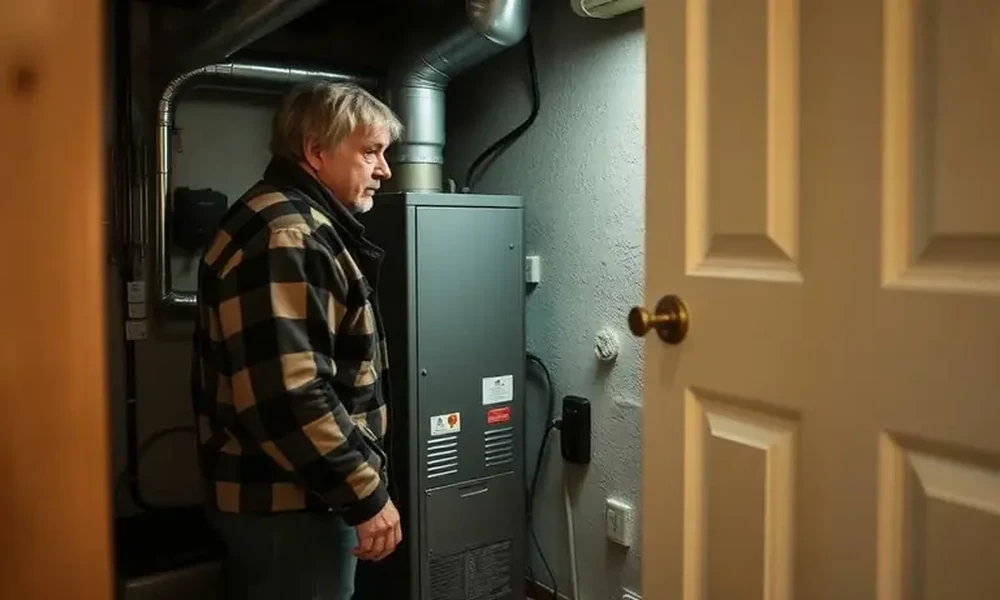
The first chilly evening of fall in the Ohio Valley has a sound. The thermostat clicks, there’s a pause, then a low whoosh from the basement, and a faint smell of toasted dust drifts out of the floor registers. Most people shrug and grab a sweater. A trained ear treats those few minutes as the most honest checkup the heating system will get all year.
A furnace that sat idle through a sticky summer wakes up with all its weak spots showing at once. Dust has settled on the burners. The flame sensor may have picked up a thin film. The blower motor hasn’t turned in months. What happens during that first startup says a lot about the winter ahead, and about whether the equipment has earned another season.
Homeowners in Hamilton County and across Boone, Kenton and Campbell counties in Kentucky who want a professional read on those signs often call Corcoran & Harnist Heating & Air Conditioning Inc. The Carrier dealer works out of Winton Road in Cincinnati and has handled residential and commercial systems around the Tri-State for more than four decades. Knowing what to listen for yourself still makes any service visit more useful.
Odd noises that are harmless, and the ones that aren’t
A burning dust smell that fades within an hour is normal. So is a soft ticking as the heat exchanger and ductwork expand. The things to worry about are the ones that linger or keep coming back.
- A rotten egg smell near the unit. Utilities add that odor to natural gas so leaks get noticed. Leave the house and call the gas company from outside.
- Burners that light, run for a few seconds, and shut off. A dirty flame sensor is the usual culprit and an easy fix. It can also mean a clogged filter is letting the unit overheat and trip its safety limit.
- A loud boom at ignition. Delayed ignition lets gas pool before it lights. Over time that strains the heat exchanger.
- Squealing or grinding from the blower. On older units this is often a worn belt. On newer ones it usually points to failing motor bearings.
- A lazy yellow flame where you’d expect a crisp blue one. That can mean incomplete combustion and a carbon monoxide risk.
That last one is a good reason to test your CO alarms the same weekend you first run the heat. Any home with gas appliances or an attached garage should have one on every sleeping level.
The point where fixing it costs more than it saves
Technicians often use a simple rule. Multiply the system’s age by the repair quote. If the result is above about $5,000, replacement usually deserves a serious look. A 16-year-old furnace with a $400 repair lands at $6,400, which means it’s time to at least get a replacement estimate.
A few other signals push the same way.
- Gas furnaces tend to last 15 to 20 years. Central air conditioners usually last 12 to 15.
- Energy bills keep climbing while your habits haven’t changed.
- Some rooms run hot and others cold, and the gap is getting wider.
- You’ve needed repairs in each of the last two seasons.
- A cracked heat exchanger. In most cases that ends the conversation.
There’s also a pairing issue many people miss. The furnace and the air conditioner share a blower and an indoor coil. Replacing only one half of an aging pair can leave you with mismatched parts that never reach their rated efficiency. That’s why so many replacements in older homes end up covering both at once.
How efficiency tiers actually feel
Furnace efficiency is measured by AFUE, the share of fuel that turns into usable heat. Older units sit around 80 percent. Condensing furnaces reach 95 to 98 percent by capturing extra heat from exhaust gases. They vent through PVC pipe and need a drain for the water they produce.
The bigger difference you’ll feel day to day is staging.
- Single stage units run at full blast and then shut off. You get temperature swings and more noise.
- Two stage units spend most of their time on a gentle low setting and only ramp up on the coldest days.
- Modulating units adjust in small steps and hold the temperature within a degree or so.
In a region with humid summers and damp, gray winters, longer low-speed run times help. They pull more moisture out of the air in July and cut down on drafty cold spots in January.
Older Cincinnati homes have one wrinkle worth knowing about. Many older furnaces vent into a masonry chimney that they share with the water heater. Once a condensing furnace takes over with its own PVC vent, the water heater is left alone in a chimney that may now be too large for it. That can cause backdrafting, so a chimney liner often needs to be part of the plan.
The refrigerant shift happening behind the scenes
New air conditioners and heat pumps have moved to lower-impact refrigerants such as R-454B and R-32, replacing R-410A. For a homeowner, this matters in a few specific ways.
- Systems old enough to use R-22 are expensive to recharge, since that refrigerant is no longer produced.
- R-410A systems can still be serviced for years. Pairing a new outdoor unit with an old indoor coil, though, generally isn’t an option anymore.
- Line sets and coils should be checked for size and condition whenever the outdoor unit gets replaced.
Options that skip the traditional setup
Not every home suits a furnace plus a condenser. Ductless mini splits work well in finished attics, additions and older houses heated by boilers and radiators. Modern cold-climate heat pumps keep producing useful heat well below freezing.
A dual fuel setup pairs a heat pump with a gas furnace backup. It suits Tri-State winters, which hover near freezing most days and only occasionally turn bitterly cold. The heat pump handles the mild stretches, and the furnace takes over when temperatures drop hard.
Geothermal goes a step further. A few feet underground, the earth in this region stays in the low to mid fifties all year. A ground loop can draw on that steady temperature for both heating and cooling. It costs the most up front, but the buried loop can last for decades, and it can be drilled vertically on smaller lots.
Air quality belongs in the same conversation. Forced-air heat dries indoor air, so a whole-home humidifier can ease static shocks and dry sinuses. Thicker media filters catch more particles. Just make sure the MERV rating you choose is one your blower can actually push air through.
A fall routine that takes an afternoon
- Change the filter before the first run and write the date on its frame.
- Clear about three feet around both the furnace and the outdoor unit, and keep leaves off the condenser.
- Vacuum the return grilles and open every supply register. Closing vents in unused rooms raises pressure in the ducts.
- On high-efficiency furnaces, check that the condensate line drains freely. A clogged or frozen line will shut the system down.
- Book a tune-up before the first hard freeze, while service calendars still have room.
The first cold night will come whether the system is ready or not. Spending a few minutes paying attention to it now is far better than a 2 a.m. discovery in January.