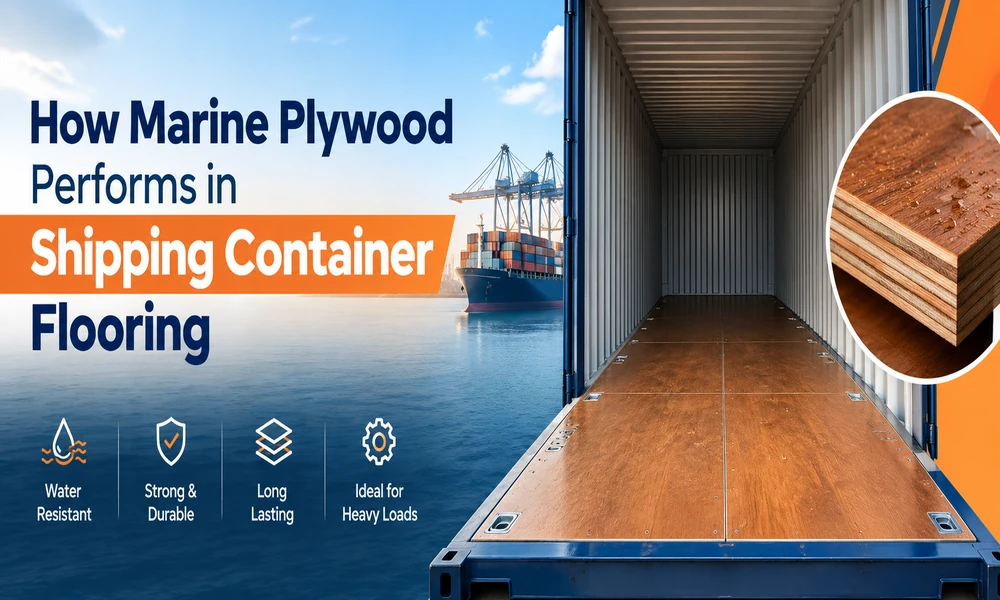
Shipping container flooring endures the rigours of supporting heavy freight while experiencing repeated loading and unloading cycles, as well as exposure to water from the outside during shipment or in storage. Container flooring must endure trips through rapidly changing humidity levels, endure routine treatments from the top side and operate in demanding use environments.
Because of these characteristics, Marine Plywood sheets are an excellent choice for container flooring. Marine Plywood is manufactured according to IS 710 specifications, contains a high-quality hardwood veneer, is bonded with a waterproof phenolic adhesive, has superior resistance to moisture and is structurally sound.
Load-Bearing Capacity of Container Flooring
When considering the loading capability of a floor, shipping container floors serve a dual purpose. Not only do they provide a walking area, but they also serve as a structural platform supporting the load above them. Shipping containers typically carry heavy machinery, equipment, and concentrated loads of freight. The plywood flooring and the support system must bear considerable weight loads.
Marine Plywood uses high-strength hardwood veneers and stable layered construction for a high load-bearing capacity and structural stability. The marine plywood supplied identifies either structural strength or load-bearing capacity as characteristics. However, the final performance of the flooring still depends on how thick the marine Plywood is, how far apart the supports are, how rigidly the marine Plywood is secured, and how concentrated the cargo load is across the floor.
Moisture Resistance in Shipping Containers
Moisture has been and continues to remain a significant issue when considering container floors. While containers may travel through multiple climates during the same trip, exposure to rain and high humidity periods can cause moisture on the flooring even without the cargo being exposed to moisture. A plywood panel primarily designed for use in a dry environment may not withstand repeated exposure to moisture, causing it to fail.
Marine plywood uses waterproof phenolic resin for bonding layers of veneer, allowing it to maintain the bond under moisture. The plywood’s construction allows it to resist delamination, rot and structural failure in wet or high-humidity areas. This waterproof characteristic is one of its best characteristics for the flooring of the most demanding applications.
Durability Under Repeated Loading and Movement
The most common application for marine plywood is for the flooring of shipping containers. Shipping containers are loaded, unloaded and moved during transport. In addition to the loading and unloading, most shipping containers are moved multiple times with a forklift or other means of transport, which increases the strain on the flooring. Due to this repeated movement, dimensional stability and resistance to failure become very important.
The current literature describes marine plywood as being dimensionally stable and suitable for long-term strength and moisture protection, as well as for boat hulls and the flooring of boats. The manufacturer of the product also provides thickness options of 19 mm (3/4″) to 25 mm (1″) for use in the same applications. The thicker the panel, the more demanding the flooring application.
Why Plywood Construction Matters
The construction quality of the marine plywood is as important as the grade. A label that states “Marine Plywood” does not tell you the entire story. Each plywood sheet is constructed differently, which impacts how that sheet was built and therefore affects its ability to perform under load and moisture. The literature provided by manufacturers of marine plywood allows users to look for hardwood veneer constructions, 100% waterproof phenolic resin bonding and no gaps in construction, as these features would all be beneficial to the user.
How to Select Marine Plywood for Container Flooring
In the case of shipping containers, when purchasing marine plywood, consumers should be looking for certification, their desired thickness, type of veneer construction and the manufacturing specifications of the plywood. Additionally, both the supporting frame and fixing system for the container must be designed to distribute loads correctly. A panel that meets a high-quality grade cannot compensate for inadequate structural support and incorrect support spacing.
Is Marine Plywood Suitable for Every Shipping Container?
Is marine plywood the right product for every shipping container? Not necessarily. The thickness, purpose and number of anticipated loads will play a role in determining the type of plywood to purchase for use in containers. Marine plywood will typically be a main choice where moisture resistance and structural strength are the most important operating characteristics.
The literature currently states that marine plywood should be used for demanding flooring applications, so to this end, both the Royale Touche literature and the standards required by IS710 are the next best options for evaluating products for severe operating environments.
Conclusion
To meet the demands of heavy loads, repetitive movement and changing moisture environments, plywood to be used in shipping containers must be constructed with hardwood veneer; bonded with waterproof phenolic resin; and constructed to resist moisture deterioration.
When determining which type of plywood is best for a specific flooring application, it is important to consider all aspects of flooring design, including thickness, distance between supports, fixing systems, expected cargo weight, and anticipated operating conditions. When considering marine plywood, review both IS710 certifications and the manufacturer’s technical specifications. These factors provide a sound basis for selecting products versus relying on the label of “marine”.